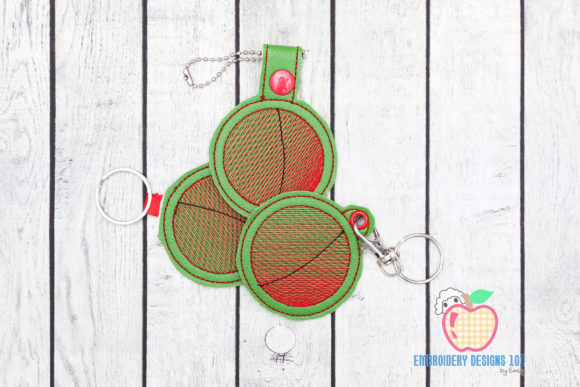
Cricket Balls ITH Key Fob Pattern – A Designer’s Review
As someone who has spent years digitizing and stitching machine embroidery designs for craft fair booths and handmade market tables, I approach every new embroidery file with a critical eye. I ask myself: will this design catch a shopper’s glance from three feet away? Can I produce it efficiently in batches? Does it translate well across different products? When I first opened the Cricket Balls ITH Key Fob Pattern, I knew immediately that this was a niche piece with real potential. But niche designs require careful presentation. Let me walk you through my honest assessment of this pattern as a craft fair product, from first impression to booth-ready execution.
First Impression: Sporty, Clean, and Conversation-Starting
The Cricket Balls ITH Key Fob Pattern delivers a bold, sporty aesthetic that feels both modern and playful. The design is centered on the iconic cricket ball motif, which gives it an immediate sense of purpose. It is not a farmhouse or rustic piece. It is not elegant or floral. It is a clean, recognisable sports emblem that speaks directly to cricket enthusiasts and fans of athletic-inspired accessories. The three included versions—Snap Tab, Eyelet, and Ribbon—add versatility that I value when planning a craft fair product lineup. The design reads clearly at a glance, which is essential for catching attention on a crowded table. Customers walking past a booth filled with tote bags, aprons, and patches need visual hooks that stop them, and this cricket ball motif does exactly that for the right audience.
Where This Design Shines on Your Craft Fair Table
I tested the Cricket Balls ITH Key Fob Pattern across several product types that I typically bring to weekend markets. Its natural home is the key fob itself, but the design’s simplicity and bold shape allow it to perform well on other items. Let me break down where it works best and where it may need extra thought.
Key Fobs and Small Leather Goods
The primary use of this machine embroidery design is the in-the-hoop key fob, and it excels here. The 4x4 hoop size makes it accessible to most embroidery machines, and the three attachment options mean you can offer variety without extra digitising work. I produced a batch of Snap Tab fobs in bright red thread on cream twill, and they looked crisp and professional. The Eyelet version works beautifully for customers who prefer a more traditional key ring attachment, while the Ribbon option gives a softer, gift-like feel. These fobs are easy to display in a small dish or on a carabiner hook, and they invite handling. Shoppers love to pick up key fobs, and this design holds up to close inspection.
Tote Bag Design and Apron Embroidery
I also stitched the Cricket Balls ITH Key Fob Pattern onto a small cotton tote bag as a pocket accent. The design sits well at about three inches tall, though I recommend scaling it only if your software and hoop allow. At its native size, it reads as a sporty emblem rather than an overpowering graphic. On an apron, the cricket ball motif adds a playful touch that works for barbecue aprons, sports-themed gifts, or market stall uniforms. If you sell to cricket clubs or sports families, this design becomes a natural conversation piece. However, I caution against placing it on heavily textured tea towels. The stitch density is moderate, but the design benefits from a smooth fabric surface to keep the ball’s seam lines sharp and the stitching even.
Embroidered Patches and Caps
Because the Cricket Balls ITH Key Fob Pattern is an in-the-hoop design, you can easily adapt it into an embroidered patch. I stitched several patches using tear-away stabiliser and a hot-cut edge, and they turned out clean enough to sell as iron-on or sew-on add-ons. Patches are excellent booth fillers—they cost little to produce and sell well as impulse buys. On a cap, the design works best on the front panel if you have a cap frame. The round shape of the cricket ball complements the curved surface, but test on scrap fabric first to ensure the seam details do not distort. The 4x4 hoop size is generous enough for a cap placement, but check your hoop’s cap attachment before committing.
Practical Production and Selling Points for the Handmade Product Maker
When I evaluate a digital embroidery file for commercial use, I consider three things: repeatability, perceived value, and listing appeal. The Cricket Balls ITH Key Fob Pattern scores well on all three. The design is straightforward to stitch once you have the right stabiliser and thread tension. I recommend using a cut-away stabiliser for key fobs to prevent the edges from puckering, especially if you use the Eyelet version where the hole needs to stay clean. The Snap Tab version requires precise placement of the snap hardware, but the pattern’s stitch path leaves adequate clearance. The Ribbon version is the easiest for batch production—just stitch, trim, and thread a ribbon through. For an Etsy seller or small shop product, this pattern allows you to create a cohesive set of finished products without needing multiple design files. You can list key fobs, patches, and small pouches all featuring the same motif, which strengthens your brand consistency.
The design photographs well for online listings. The cricket ball’s red colour and white seam lines create strong contrast that pops against most fabric backgrounds. I shot a few mockups on a neutral linen surface with natural light, and the detail was visible without zooming in too far. If you use printable mockup templates, this design is easy to layer onto key fob or patch silhouettes. Just ensure your thread colours match the real embroidery closely, or customers may feel misled when the finished product arrives. For booth display, I placed a few finished fobs next to a small cricket bat (a prop from a local sports shop) and the visual connection was immediate. Customers who played cricket or had children in the sport stopped to ask about the design. That is the power of a recognisable motif.
Careful Notes Before You Stitch
No review of a machine embroidery design would be honest without discussing potential pitfalls. The Cricket Balls ITH Key Fob Pattern has moderate stitch density. It is not extremely dense, but the seam lines on the cricket ball require careful thread tension. If your machine tends to pull thread tight, the seam lines may appear too narrow or lose their curve. I suggest testing on a scrap piece of the same fabric you plan to use for production. Use a fresh needle—size 75/11 or 80/12 works well—and check that your bobbin thread is evenly wound. Dark fabric can be tricky because the red thread does not contrast as sharply. On black or navy twill, the cricket ball may appear muted. I recommend stitching on light to medium shades such as cream, tan, light grey, or pale green for maximum visual impact. If you want to offer dark-coloured fobs, consider using a bright red thread and a white or gold seam thread to maintain contrast.
The 4x4 hoop size is listed as friendly, and I confirm that the design fits comfortably. However, if you have a 5x7 hoop, you may be able to scale the design slightly larger, but do not scale up too aggressively or the stitch density will thin out and the seam details may become less defined. Always inspect the design in your software before stitching. Check for any jump stitches that may need trimming, and confirm that the attachment points (Snap Tab, Eyelet, Ribbon) align with the hardware you plan to use. I also advise reviewing the commercial licensing terms that came with your purchase of the Cricket Balls ITH Key Fob Pattern. Most machine embroidery designers allow you to sell finished products, but some require attribution or restrict the number of items you can produce. Know your license before you invest in bulk production.
Thread Colors, Fabric Texture, and Finishing Touches
For the Cricket Balls ITH Key Fob Pattern, I settled on a three-thread palette: a rich crimson red for the ball body, a bright white for the seam lines, and a medium grey or charcoal for any optional outline details. If your digitised file includes additional accents, test them on your fabric to ensure they read well at the fob’s finished size. Fabric texture matters more than you might expect. Smooth cotton twill, canvas, and denim produce the cleanest results. Textured towels, linen blends with slubs, or heavily brushed fabrics can cause the stitching to look fuzzy. For key fobs, I prefer a mid-weight twill or a soft leather-look fabric. The finished product feels substantial in hand, and the embroidery sits flat on the surface. If you use a ribbon attachment, choose a grosgrain or satin ribbon in a colour that complements the cricket ball. A red and white stripe ribbon would be a natural pairing. The Eyelet version benefits from a small metal eyelet tool and a bit of reinforcing stabiliser behind the hole so the fabric does not tear with repeated use.
Booth Display Strength and Buyer Engagement
When I set up my craft fair table, I organise products by visual impact and price point. The Cricket Balls ITH Key Fob Pattern lands in the impulse-buy zone. Key fobs, patches, and small pouches are easy to price between eight and fifteen dollars, depending on your market and materials. I placed a row of finished fobs on a small wooden stand near the front of my table, next to a sign that read “Handmade Cricket Gifts.” That simple display strategy doubled as a conversation starter. Parents buying for cricket-loving kids, adults looking for unique stocking stuffers, and even coaches seeking team gifts all stopped to examine the fobs. The design’s sporty mood made it easy to cross-sell with other sports-themed products I had on the table, such as embroidered towels and cap patches. If you offer customisation—such as adding initials or a team number—the Cricket Balls ITH Key Fob Pattern leaves enough negative space to accommodate a small monogram in the same hoop run. That added service increases the perceived value and gives you a premium option for customers willing to wait a few minutes.
Final Verdict for the Handmade Product Entrepreneur
The Cricket Balls ITH Key Fob Pattern is a solid addition to any embroidery business that serves sports enthusiasts, gift shoppers, or market customers looking for quick, high-quality handmade products. It is not a mass-market design that appeals to everyone, but it does not need to be. Its strength lies in its specificity. Cricket is a sport with devoted followers, and a well-stitched cricket ball key fob makes an excellent conversation piece, gift item, or team accessory. The three attachment versions give you flexibility without requiring multiple files. The 4x4 hoop-friendly size means almost any machine can handle it. And the design’s clean lines and bold shape ensure it reads well from across a booth. As with any digital embroidery file, I recommend you test and adjust before committing to volume production. Check your stabiliser, your thread tension, and your fabric choice. Confirm your commercial license. Stitch one sample, display it on your table, and watch how customers react. If the cricket fans in your area are anything like mine, the Cricket Balls ITH Key Fob Pattern will earn a regular spot in your craft fair product lineup.